

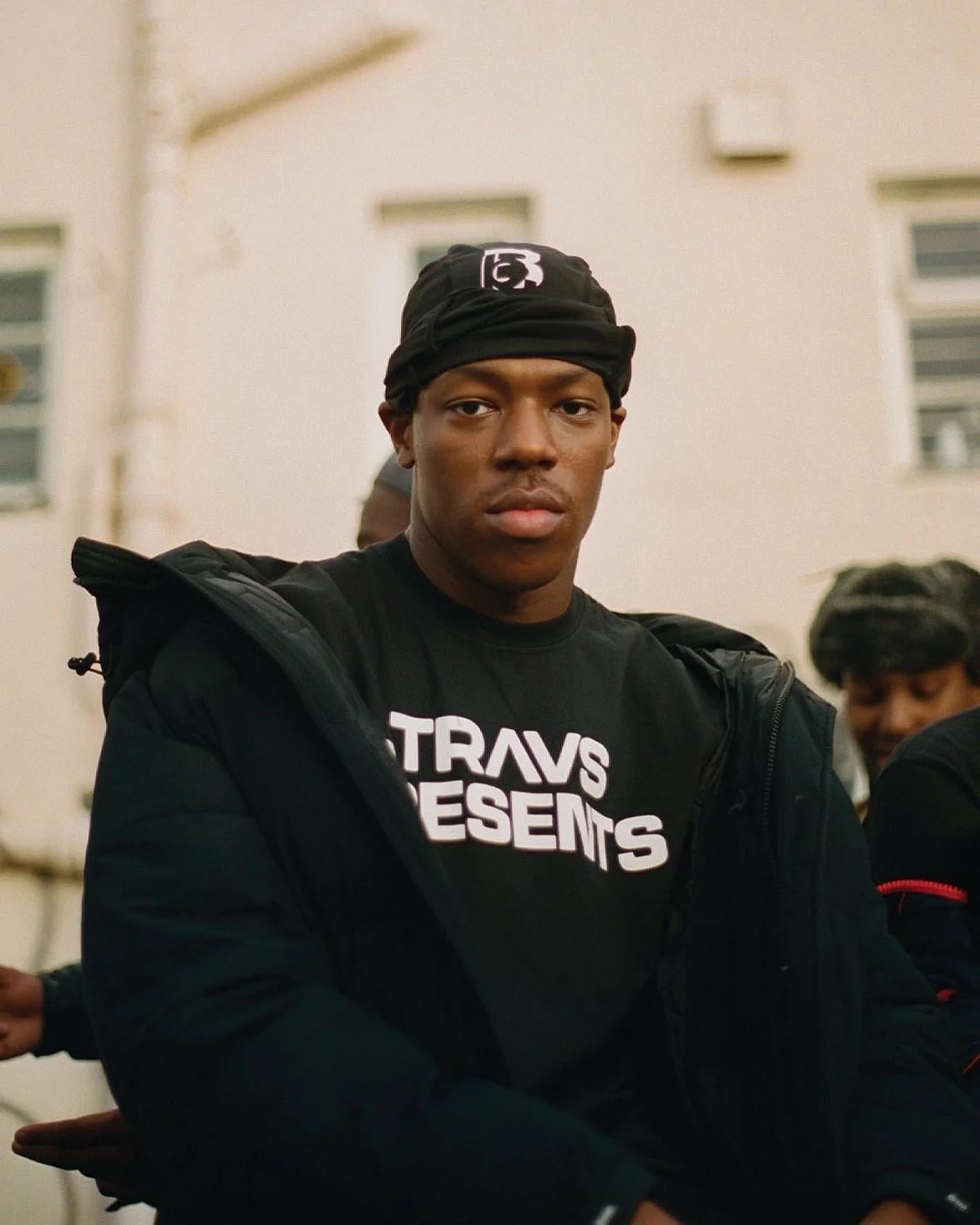



Ceebo Explores the Price of Fame on New Mixtape BLOCCSTAR Featuring Wretch 32

South London rapper Ceebo examines the complicated relationship between ambition, commercial success and artistic integrity on BLOCCSTAR, his 12-track mixtape released on October 2, 2026.
The project finds the Lambeth artist confronting a question that has followed hip-hop throughout its history: can a rapper achieve mainstream success without losing the values and creative independence that made the music meaningful in the first place?
Featuring Wretch 32, Blanco, Two Tone, Odzmoney and members of the 400 collective, BLOCCSTAR combines detailed storytelling with a broad musical palette. Its concept draws inspiration from William Shakespeare’s Macbeth, using the familiar story of ambition and its consequences to examine the pressures that come with a rising music career.
For Ceebo, the mixtape represents more than another collection of songs. It is a narrative about what happens when an artist begins achieving the success they have always wanted and discovers that reaching the top can create a different set of problems.
Ceebo Uses Macbeth to Explore the Music Industry
The central idea behind BLOCCSTAR is the tension between wanting to succeed and remaining true to yourself.
In Shakespeare’s Macbeth, the pursuit of power gradually changes the protagonist, forcing him to confront the consequences of his ambition. Ceebo adapts that underlying conflict to the modern music industry, where financial opportunities, commercial expectations and public recognition can challenge an artist’s original creative intentions.
The project’s opening establishes the ambition driving its central character. As the story develops, however, the pursuit of success becomes increasingly complicated. Songs such as “Shallow” examine the attractions of material wealth, while “Macbeth’s Soliloquy” and “These Days” turn towards questions of personal values and responsibility.
The concept gives the mixtape a structure that extends beyond individual tracks. Instead of treating every song as a separate statement, Ceebo connects them through a developing story about ambition and its consequences.
That approach distinguishes BLOCCSTAR from projects built primarily around singles and collaborations. Listeners are invited to follow a character through different stages of success rather than simply move between unrelated records.
It also allows Ceebo to examine the music industry without reducing the subject to a straightforward criticism of commercial ambition. Wanting financial security and a larger audience is not necessarily incompatible with making meaningful music. The difficulty arises when an artist must decide what they are willing to compromise to achieve those goals.
Wretch 32 Joins Ceebo on “Macbeth’s Soliloquy”
One of the project’s central moments arrives with “Macbeth’s Soliloquy”, featuring veteran UK rapper Wretch 32.
The collaboration carries particular significance because Wretch represents an established generation of British lyricists whose careers developed through technical skill, songwriting and cultural influence.
His presence connects Ceebo’s fictional narrative to the experiences of an artist who has spent years navigating the music business. The song’s brooding boom-bap production provides a fitting backdrop for a conversation about ambition, identity and the responsibilities that accompany success.
Rather than serving as a guest appearance included simply to increase the project’s profile, Wretch’s contribution fits directly into its central concept.
The collaboration also reflects Ceebo’s interest in working with artists whose experience can contribute to the story he wants to tell. In this context, the relationship between the two rappers becomes part of the music’s meaning.
Other guests bring different perspectives to the project. Blanco appears on “Gets Like Dat”, a collaboration built around the challenges of balancing commercial expectations with creative independence.
The 400 collective, comprising N4T, Chefbkay, Syst7m and Jbiz, appears on “Coupé Décalé”, adding a group dynamic to a project otherwise centred on Ceebo’s personal journey.
Together, these appearances connect Ceebo’s story to different corners of British rap while allowing him to maintain control of the mixtape’s central narrative.
A Sound That Moves Beyond Traditional UK Rap
Musically, BLOCCSTAR moves between boom-bap, road rap, classic hip-hop and Afro-influenced sounds. The changing production helps distinguish the different stages of the story while reflecting Ceebo’s willingness to experiment.
“Owner” introduces a more celebratory energy, while “Jangolova” draws on the atmosphere of Black British nightlife. “Coupé Décalé” expands that energy through its group performance, contrasting with the more introspective moments elsewhere on the project.
The production choices are important to the mixtape’s central argument. As the protagonist moves towards greater recognition, the sound becomes increasingly varied and, at points, more polished and commercially accessible.
That development mirrors the tension between artistic independence and mainstream ambition. The music does not remain in one place because the character’s priorities and circumstances are changing.
Ceebo’s approach also reflects a wider movement within UK rap, where artists increasingly incorporate different musical influences rather than remain confined to a single genre.
For a rapper associated with thoughtful writing and social observation, experimentation provides another way to develop his identity without abandoning the lyrical detail that defines his work.
Returning to Lambeth on “H.I.T.H”
Despite its interest in fame and commercial success, BLOCCSTAR remains connected to Ceebo’s South London background.
“H.I.T.H” draws on RAY BLK’s “My Hood”, transforming that musical reference into a statement about home and community. The track brings the project back towards the surroundings that helped shape Ceebo’s perspective.
That return is significant within the wider narrative. As the mixtape explores the attractions and complications of success, it also asks what makes that success worthwhile.
For artists whose music is rooted in their communities, commercial recognition can create a difficult balance. A larger audience may provide new opportunities, but the experiences that gave the music its meaning can become harder to represent as an artist’s circumstances change.
By returning to Lambeth, Ceebo reconnects the story to the place from which it began.
The closing title track, “Bloccstar (BITW)”, brings the project towards a more triumphant conclusion. Rather than ending entirely in disillusionment, the mixtape acknowledges the achievement involved in rising beyond difficult circumstances.
The ending does not erase the contradictions explored earlier. Instead, it suggests that ambition and personal identity can coexist, even when maintaining that balance requires difficult decisions.
Ceebo’s Growing Position in British Hip-Hop
BLOCCSTAR follows Ceebo’s earlier projects LAMBETHNOTLA and blair babies, continuing a body of work shaped by detailed writing, social observation and an interest in the experiences of younger British generations.
His music often connects personal ambition to broader economic and social circumstances. That perspective gives his stories a context beyond individual success, examining how the environments people grow up in influence their opportunities and expectations.
The new mixtape expands that approach by focusing more directly on the music industry itself. Instead of looking only at the challenges facing people trying to escape difficult circumstances, Ceebo considers what happens after the first stages of success.
It is a useful shift in perspective. Achieving recognition can change an artist’s financial situation and public standing, but it can also introduce new pressures involving contracts, commercial expectations and the need to maintain an audience.
By placing those questions at the centre of BLOCCSTAR, Ceebo creates a project that speaks to the ambitions of emerging musicians while remaining grounded in the realities of his own career.
What BLOCCSTAR Means for London Rap
London’s hip-hop scene contains artists pursuing very different definitions of success. Some focus on commercial visibility, others on underground credibility, and many attempt to combine both.
Ceebo’s latest project recognises that these goals are not always easy to reconcile. Commercial ambition can open doors, but creative independence remains important to artists who want their work to retain substance and personal meaning.
The use of Macbeth gives those concerns a clear narrative framework, while the mixture of musical styles allows the project to move between confidence, reflection and celebration.
With BLOCCSTAR, Ceebo presents a portrait of an artist confronting the possibilities and risks of his own ambition. Its central question is not whether success is worth pursuing, but how to pursue it without losing sight of what made the journey meaningful.
For London hip-hop listeners looking for projects that combine lyrical storytelling with a broader conceptual vision, the mixtape offers a substantial addition to the UK’s 2026 release calendar.