
UK Rap Mourns Sway DaSafo as Pioneering MC Dies Aged 44
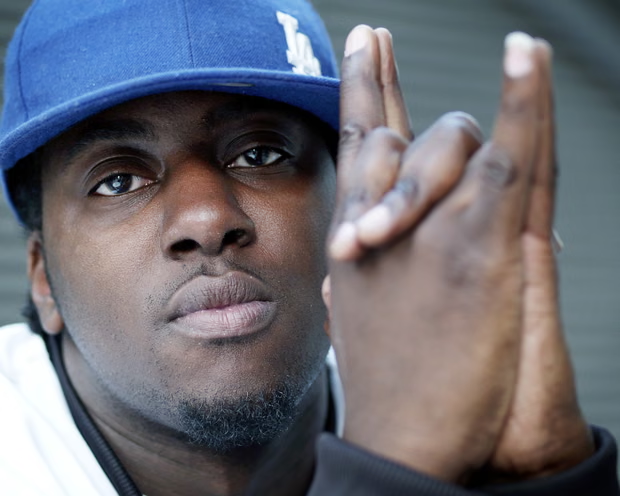
The UK hip-hop community is mourning the loss of one of its most important independent pioneers following the death of Sway DaSafo at the age of 44.
The British-Ghanaian rapper, born Derek Andrew Safo, died at his home in Ghana. News of his death emerged on September 17, with the MOBO Awards among those paying tribute. No official cause of death has been announced.
For longtime followers of British rap, Sway’s impact stretches far beyond individual singles. He emerged during an era when UK rappers were still fighting for recognition alongside dominant American hip-hop acts and became one of the artists who demonstrated that independence did not have to mean staying on the sidelines.
A Historic MOBO Moment
One of the defining moments of Sway’s career arrived at the 2005 MOBO Awards.
Still independent and without a debut studio album released, Sway won Best Hip-Hop Act, beating a field that included major international stars such as 50 Cent and The Game. MOBO’s own history records that his independent mixtapes, This Is My Promo Vol. 1 & 2, helped build the momentum behind his breakthrough.
The achievement became particularly significant for UK hip-hop because it arrived before the streaming era made independent distribution substantially easier. Sway built his audience through mixtapes, performances and grassroots promotion.
His long-awaited debut album, This Is My Demo, followed in 2006.
The record showcased the storytelling, humor and distinctly British perspective that had separated Sway from many of his contemporaries. It subsequently earned a nomination for the Mercury Prize, further establishing him as one of the standout British rappers of his generation.
From “Little Derek” to “Level Up”
Sway continued developing his sound rather than remaining tied to one era of UK rap.
Early records such as “Little Derek” became associated with the storytelling side of his music, while later releases introduced him to another generation of listeners.
That included “Still Speedin’” and particularly “Level Up,” which became a UK Top 10 hit in 2012.
His ability to move between traditional hip-hop, grime-influenced production and faster electronic sounds made him an unusual figure in the British scene.
Sway also worked with artists including Kano, Ed Sheeran, Akon and Riz Ahmed, while his influence increasingly extended behind the scenes.
Sway’s Influence Went Beyond His Own Music
One of the clearest examples of that influence was his relationship with KSI.
Sway helped develop KSI during the early stages of his transition from YouTube personality into music. Following news of Sway’s death, KSI credited him with believing in him and giving him an opportunity when others did not.
That mentoring role reflected another part of Sway’s legacy: he was not simply trying to establish himself as an artist, but also participated in developing the wider British music ecosystem.
His career extended beyond recording as well. Sway appeared in the British crime drama Top Boy and pursued other acting work alongside music.
Tributes Across UK Hip-Hop
News of Sway’s death prompted tributes from across British music and entertainment.
The MOBO Awards remembered his 2005 victory as an important moment not only for Sway but for UK hip-hop itself. KSI, Lemar and members of the wider UK rap community were among those who publicly remembered his influence, talent and support for other artists.
His death also comes at a moment when British rap occupies a dramatically different position from the scene Sway entered more than two decades ago.
UK rappers now routinely reach international audiences, headline major festivals and collaborate with some of the biggest artists in global hip-hop. Sway belonged to an earlier generation that helped create space for that growth.
From selling independent mixtapes to making MOBO history, earning a Mercury Prize nomination and eventually helping younger artists develop their own careers, his story became intertwined with the evolution of modern British rap.
Sway DaSafo was 44. His legacy remains embedded in the history of UK hip-hop and in the generation of artists who followed him.