Keffe D Found Guilty in Tupac Shakur Murder Nearly 30 Years After Rapper’s Death
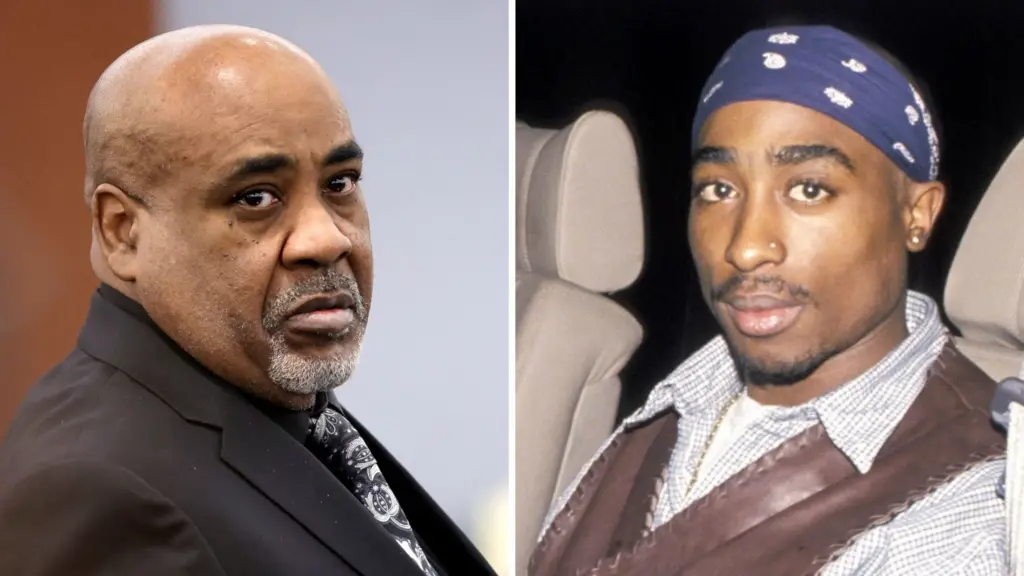
Nearly three decades after Tupac Shakur was killed in Las Vegas, a jury has found Duane “Keffe D” Davis guilty of first-degree murder in the rapper’s death.
The verdict marks the first conviction in the long-running case surrounding one of the most consequential unsolved killings in hip-hop history. Davis, a former leader of the South Side Compton Crips, was accused of orchestrating the September 1996 drive-by shooting that killed Shakur.
The Las Vegas jury reached its decision after roughly three hours of deliberation following an 11-day trial. Davis was convicted of first-degree murder with the use of a deadly weapon. He now faces the possibility of life imprisonment without parole, with sentencing scheduled for October 13, 2026.
For Tupac’s family, longtime fans and the wider hip-hop community, the verdict represents a dramatic conclusion to a case that has remained surrounded by speculation since the rapper’s death in 1996.
Keffe D Convicted in Tupac Shakur’s Killing
Davis, 63, was not accused of being the person who physically pulled the trigger.
Instead, prosecutors argued that he helped organize the attack and supplied the gun used in the shooting. Under Nevada law, a person can face a murder charge for participating in or orchestrating a killing even if they did not personally fire the weapon.
Prosecutors said the shooting was motivated by an earlier confrontation at the MGM Grand in Las Vegas.
Tupac and members of his entourage had been involved in a fight with Orlando “Baby Lane” Anderson, Davis’ nephew, earlier that night. Prosecutors argued that the confrontation led Davis and others to seek revenge.
Later that evening, Tupac was riding in a BMW driven by Death Row Records co-founder Marion “Suge” Knight when a white Cadillac pulled alongside the vehicle at a Las Vegas intersection.
Gunfire erupted.
Tupac was struck multiple times and died six days later, on September 13, 1996, at the age of 25.
Davis’ Own Words Became Central to the Case
One of the most important elements of the prosecution’s case was Davis’ history of publicly discussing Tupac’s killing.
Over the years, Davis repeatedly described his involvement in interviews, documentaries and other media appearances.
His 2019 memoir, Compton Street Legend, also brought renewed attention to his account of the shooting.
Prosecutors used those statements to argue that Davis had effectively acknowledged his role in organizing the attack. They also presented recordings from interactions with investigators and other material that they said supported their case.
The defense offered a very different interpretation.
Davis’ attorney argued that his client’s public statements were exaggerated and designed to increase his profile and generate money. The defense also questioned whether investigators had sufficient independent evidence to establish Davis’ role in the killing.
The jury ultimately rejected that argument.
Davis Plans to Appeal
The guilty verdict does not necessarily end the legal proceedings.
Davis intends to appeal the conviction, according to Reuters. His defense had challenged the prosecution’s reliance on his past statements and argued that the evidence did not adequately establish his involvement.
For now, however, Davis remains convicted of first-degree murder.
His sentencing is scheduled for October 13, when the court is expected to determine the punishment following the verdict.
The potential sentence is severe, with Davis facing life imprisonment without the possibility of parole.
The First Conviction in a Nearly 30-Year Mystery
Tupac’s murder became one of the most famous mysteries in music history almost immediately after his death.
The rapper had been shot just weeks after the release of his landmark album All Eyez on Me. At the time, Tupac was one of the biggest artists in the world and one of the most recognizable figures associated with the West Coast hip-hop movement.
His death also occurred during an especially tense period in rap.
The rivalry between East Coast and West Coast hip-hop had become increasingly intense during the 1990s, with Tupac and Death Row Records positioned at the center of the West Coast movement.
His death therefore had consequences that extended far beyond one artist.
It became part of the mythology surrounding 1990s hip-hop.
For decades, fans debated who was responsible, why the shooting happened and whether the full story would ever be known.
The conviction of Davis represents the first major courtroom resolution in that long-running saga.
Tupac’s Death Changed West Coast Hip-Hop
Tupac Shakur’s influence on West Coast hip-hop cannot be separated from the circumstances surrounding his death.
His music had already established him as one of the defining artists of the 1990s.
After joining Death Row Records, Tupac became closely associated with Los Angeles and the West Coast’s gangsta-rap movement. His rivalry with East Coast artists, particularly The Notorious B.I.G. and figures associated with Bad Boy Records, became part of the larger cultural narrative surrounding hip-hop during the decade.
His death intensified that narrative.
Tupac’s passing at just 25 transformed him from a superstar into an enduring cultural icon.
Nearly 30 years later, his music remains influential and his image continues to appear throughout hip-hop culture.
The guilty verdict now adds another chapter to that legacy.
What the Verdict Means for Tupac’s Family
The case has been closely followed by members of Tupac’s family throughout the trial.
The verdict provides a measure of legal accountability after decades of uncertainty, although Davis’ planned appeal means the case is not necessarily finished.
For the Shakur family and Tupac’s supporters, however, the conviction represents a significant moment.
For years, there had been no one convicted in connection with the rapper’s murder.
Now, nearly three decades after the shooting, a jury has determined that Davis was criminally responsible for the killing.
Orlando Anderson Was Never Charged
Davis’ conviction also brings renewed attention to Orlando Anderson, the man whose name had been connected to the case for decades.
Anderson, Davis’ nephew, was identified as a suspect in the years following Tupac’s death but was never charged with the murder. He died in 1998, less than two years after Tupac was killed.
Because Anderson and the other men alleged to have been involved in the shooting are now deceased, Davis became the only person to face prosecution in the case.
That made the trial especially significant.
Prosecutors did not need to prove that Davis fired the fatal shots. Instead, they argued that his role in organizing the attack made him legally responsible for the murder.
The jury agreed.
A Historic Moment for Hip-Hop
The conviction is more than a major criminal justice development.
It is also a significant moment in hip-hop history.
Tupac Shakur remains one of the most influential artists the genre has produced, and his death has been discussed by multiple generations of rappers and fans.
His murder became intertwined with conversations about violence in hip-hop, the East Coast-West Coast rivalry and the dangers surrounding the music industry during the 1990s.
The case remained unresolved for so long that the possibility of a courtroom verdict once seemed remote.
The 2023 arrest of Davis changed that.
Three years later, a jury has now delivered a guilty verdict.
Tupac’s Legacy Continues
Tupac’s music has survived almost 30 years since his death.
Albums such as All Eyez on Me and Me Against the World continue to be regarded as landmark works, while his lyrics remain influential among artists across generations.
His influence extends well beyond Los Angeles and the West Coast.
But for West Coast hip-hop in particular, Tupac remains one of the central figures in the region’s history.
His career helped define an era when Los Angeles became the center of global hip-hop culture, and his relationship with Death Row Records placed him directly within one of the most powerful movements in rap history.
The circumstances surrounding his death became equally significant.
Now, the conviction of Keffe D provides a legal conclusion to one part of that story.
Nearly 30 Years Later, the Case Has Reached a Verdict
Duane “Keffe D” Davis has been found guilty of first-degree murder with a deadly weapon for his role in orchestrating the killing of Tupac Shakur.
The verdict came after decades of investigation, speculation and unanswered questions.
Davis plans to appeal, and sentencing is still ahead.
But the historic significance of the conviction is already clear.
For almost 30 years, Tupac’s murder remained one of hip-hop’s most famous unsolved cases.
Now, for the first time, a jury has determined that someone is criminally responsible for his death.
Tupac Shakur was only 25 when his life was cut short.
Nearly three decades later, his music continues to influence hip-hop—and the case surrounding his death has finally reached a courtroom verdict.