
Grime Revival: Veteran MCs Reclaiming the Sound
By Eli Jesse
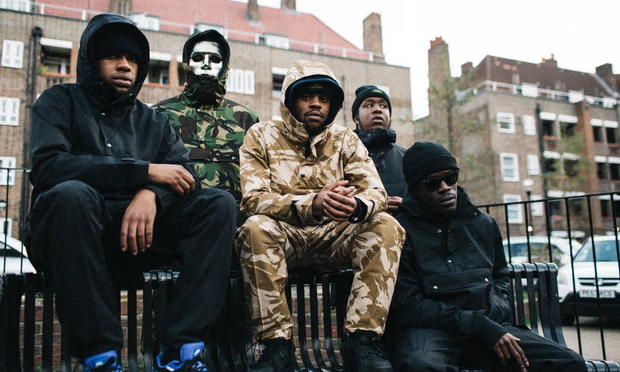
As UK hip-hop continued its December run, something important happened beneath the drill-dominated surface — grime started speaking louder again. Not as a nostalgia act, but as a refined, battle-tested sound carried by veteran MCs who helped build UK rap from the ground up. This period showed grime wasn’t chasing relevance; it was reasserting authority.
Rather than competing with drill’s aggression or mainstream rap’s polish, grime leaned into what it has always done best: bars, presence, and raw energy. December became a reminder that when grime MCs step back into focus, they do so with purpose.
Why Grime Is Resurfacing Now
Grime’s resurgence isn’t accidental. As UK rap matures, audiences are craving clarity, lyricism, and identity. Veteran MCs understand timing, pressure, and authenticity — qualities that resonate strongly during year-end reflection.
Several factors pushed grime back into the spotlight:
- Listener fatigue with over-saturated drill sounds
- Increased appreciation for lyric-first rap
- Younger audiences discovering grime through clips and freestyles
- Veterans returning without label pressure
Grime didn’t need reinvention. It simply needed space.
Skepta – Precision Over Noise
Skepta’s presence during this period reinforced why he remains one of grime’s most respected figures. His approach avoided flashy rollouts or trend-chasing. Instead, he focused on sharp delivery, confident minimalism, and technical excellence.
His bars felt calculated — less about proving dominance, more about reminding listeners who set the standards. The production stayed clean and skeletal, allowing his voice to cut through without distraction.
Skepta’s return energy wasn’t loud, but it was commanding.
JME – Bars, Culture, and Consistency
JME continued to represent grime in its purest form: bars over hype. His releases and appearances leaned into humor, cultural references, and lyrical stamina, reinforcing grime’s battle-rap DNA.
What stood out most was JME’s consistency. While others adapt to trends, he remains grounded in:
- Straightforward flows
- Playful but pointed lyricism
- Community-driven culture
His presence showed that grime doesn’t age — it sharpens.
Dizzee Rascal – Legacy Energy With Modern Weight
Dizzee Rascal’s involvement during this stretch carried symbolic weight. As one of grime’s original architects, his return reminded listeners of the genre’s roots while proving its relevance today.
Rather than sounding dated, Dizzee’s delivery felt seasoned and authoritative. His bars reflected experience, growth, and survival in an industry that often moves on quickly.
This wasn’t nostalgia — it was legacy reaffirmation.
Grime’s Sound: Raw, Fast, Unfiltered
December grime releases stayed loyal to the genre’s foundations:
- Fast tempos
- Minimalist instrumentals
- Emphasis on cadence and breath control
- Aggressive clarity
Unlike drill’s dark atmospheres, grime felt open and confrontational, built for clashes, radio sets, and live environments.
The sound reminded listeners that grime is meant to be felt in real time, not just streamed quietly.
Radio Sets & Freestyle Culture
Grime’s revival was amplified through radio appearances and freestyle sessions. Veteran MCs dominated platforms where lyricism matters most, reminding audiences of grime’s competitive spirit.
These moments mattered because:
- Freestyles cut through production gimmicks
- Bars were judged instantly
- Authenticity couldn’t be edited
For many fans, these performances were highlights of December.
Impact on the New Generation
Grime’s resurgence didn’t alienate younger listeners — it inspired them. Many newer UK rappers draw from grime’s discipline, even if their sound leans drill or melodic.
Grime taught:
- Flow control
- Bar structure
- Crowd engagement
- MC presence
December proved grime still acts as UK hip-hop’s training ground.
Cultural Importance
Grime’s return carried cultural weight beyond music. It represented:
- Ownership of UK rap identity
- Resistance to trend-dependency
- Respect for lyrical craftsmanship
In a genre increasingly driven by algorithms, grime stood for human skill and performance.
Conclusion
Grime didn’t return to compete — it returned to remind. Veteran MCs used December to re-establish presence, sharpen bars, and reconnect with the culture they helped build.
From Skepta’s precision to JME’s consistency and Dizzee Rascal’s legacy energy, grime showed it still belongs at the core of UK hip-hop.
The message was clear: trends fade, bars remain.